2025 Impact Report

Going Further Together

Leslie Lynn Smith

It is a privilege to write to you for the first time as president and CEO of the Charlottesville Area Community Foundation. I joined CACF because I believe deeply in the good that a community foundation can do, and because the values I found here align fully with my own. Since arriving, I have been working alongside a remarkable team and an extraordinary network of donors, partners, and community members. I see CACF’s values show up consistently in every partnership and conversation about directing resources. This past year was one of focused transition for the foundation: strengthening our work, deepening relationships, and preparing for what comes next. And 2025 reminded us why this work matters.

When Supplemental Nutrition Assistance Program benefit cuts took effect in November, community members across our region lost access to food they had been depending on. Partner organizations saw pantry visits climb, and food banks and rapid-response groups worked hard to meet the demand. We gathered funders together to hear directly from these organizations and identify gaps in funding across our region. This is the role we exist to play—leveraging regional data, dollars, and community knowledge where they are needed most.

Our grantmaking reflects the breadth of this community’s needs and strengths. In 2025, the foundation made 2,154 grants and distributions totaling $31.9 million, reaching organizations across Charlottesville and the counties of Albemarle, Buckingham, Fluvanna, Greene, Louisa, Nelson, and Orange. This work spans food access, housing, health, youth development, the arts, environmental stewardship, and equity initiatives. We are proud to share that both grant size and total dollars distributed grew this year, and are especially pleased to welcome four new scholarship funds supporting Buckingham County high school students.

As we move forward, I do so with deep gratitude for what has been built here, and with genuine excitement for what we will build together. Thank you for your trust, your generosity, and your commitment to our region.

With gratitude,

Signature

Leslie Lynn Smith
President & CEO

Our Mission

As a community-centered, equity-forward institution, our mission is to improve the quality of life for those negatively impacted by inequitable systems across our region so that we can be a region in which everyone can belong, participate, contribute, and thrive.

Our Values

We hold ourselves accountable to living the values of curiosity, truth, solidarity, proximity, and repair in all parts of our work, practice, and organization.

Supporting Our Region

Together with funders and local organizations, the Community Foundation works to strengthen our region in four key ways.

Understanding Our Region

The data reveals that people across our region are experiencing vastly different realities and shows us where coordinated investment can make the most difference.

graph of food insecurity

Housing Burden

Percentage of households spending 30% or more of their household income on housing costs.

Educational Attainment Among 18- to 24-year-olds

Innovative Funding & Partnerships

From Insight to Impact
Yolunda Harrell
Yolunda Harrell, CEO and co-founder of New Hill Development

New Hill Development was established in 2018 to grow wealth and home ownership in Charlottesville’s Black community. Through market research and focus groups on a community vision plan, they found that residents had a significant interest in the food sector but no dedicated spaces to help them collaborate and grow. BEACON Kitchen was created to expand the local food ecosystem, broaden access, and remove barriers so that food entrepreneurs could bring their vision to life.

The Community Foundation was an early supporter of New Hill. We provided grants to support capital costs and worked with fundholders on recoverable grants. This flexible, patient capital—with no interest and no credit reporting—helped New Hill Development pay down higher-interest debt faster and freed up more resources to support operations. 

After successfully running a pilot kitchen for 2.5 years and acquiring a mix of funding sources, BEACON Kitchen opened its doors to the community in April 2025. Today, around 20 active members including caterers, bakers, beverage makers, and product manufacturers are building businesses and growing together in the space. Projects like BEACON demonstrate why the Community Foundation works to make innovative, flexible capital available to organizations that are doing the hard, necessary work of building something new. 

Our Community Endowment Fund

The Community Endowment Fund gives the Community Foundation the flexibility to direct resources where they are needed most, whether that means investing in affordable housing, building the capacity of local organizations, or supporting community-driven initiatives like the two featured here.

A Seat at the Table

For more than a decade, New City Arts Initiative has organized Charlottesville SOUP, an annual community dinner where attendees decide together which local artist receives a grant. Artists pitch their projects over a shared meal, and the crowd votes for the one they want to support. Since 2013, the event has awarded $52,627 in grants to 22 artists across Charlottesville and the surrounding counties.
SOUP exists because traditional grantmaking has historically excluded artists who lack the time, resources, or familiarity with formal application processes. By removing those barriers and putting the decision in the hands of community members, New City Arts has built a model that reflects its core belief that those closest to the problem are closest to the solution.

For years, New City Arts ran SOUP on an extremely lean budget, relying on in-kind donations from small businesses to cover the cost of the meal. Finding funding was difficult because most funders wanted to fund the outcome, not the process itself.

The Community Foundation became a sponsor in 2024 and committed to a four-year partnership in 2025, providing capacity-building support that allowed New City Arts to strengthen the open call process, better support artist finalists, and grow the grant amount. The Community Foundation also conducted participant interviews to help New City Arts evaluate and shape the future of the program.

SOUP remains the only grantmaking opportunity for individual artists in Charlottesville, but New City Arts hopes that will change.

Powering Nonprofits

Through its partnership with Catchafire, the Community Foundation connects local nonprofits with skilled volunteers at no cost. In 2025, the Community Foundation partnered with the Anne & Gene Worrell Foundation to expand Catchafire access to all nonprofits in Central Virginia, saving organizations $5.8 million in costs.

Operation Social Equality, a local organization that addresses mental health wellness from the root, has used Catchafire for everything from social media branding and website design to accounting support, saving them thousands of dollars in professional services.

Two people sitting on a bench talking
Kishara Griffin and Sol Redd-Martin, co-founders of Operation Social Equality

Trust the process! Finding a volunteer who really gets your vision might feel like a challenge, but you’ll be surprised by the positive impact they can have on your organization.

Telling a Fuller Story

Angilee Shah, CEO and editor-in-chief of Charlottesville Tomorrow

Local news is disappearing across the country, and Central Virginia is no exception. The number of local news outlets has declined steadily, and what remains is largely driven by commercial interests that do not always serve the full diversity of the region. Many residents do not see themselves reflected in the media narratives about their own neighborhoods and counties, and they lack the information they need to participate fully in the decisions that shape their lives. 

Charlottesville Inclusive Media formed in 2021, bringing together Vinegar Hill Magazine, In My Humble Opinion, and Charlottesville Tomorrow with the goal of creating a more inclusive and robust local media landscape that closes information gaps, shifts narratives, and improves outcomes in the region. 

The foundation began supporting CIM early, with COVID-19-response funding helping the coalition get off the ground. Over time, conversations with Community Foundation staff helped both CIM and the foundation sharpen their messaging and make the broader case for investing in local media as essential community infrastructure. Subsequent Solidarity Program grants provided multiyear, flexible funding that allowed CIM to build real capacity. 

In 2025, with support from the John D. and Catherine T. MacArthur Foundation and a grant from the Community Foundation to close the gap in funding, CIM launched an Information Ecosystem Assessment for Central Virginia, covering Fluvanna, Louisa, Madison, and Nelson counties. Working in collaboration with the Listening Post Collective and the Community Foundation, the assessment examines the critical information needs of diverse residents in our region across issues including health, education, transportation, economic opportunity, and civic participation.  

Donor-Advised Funds

Matching Resources to Needs

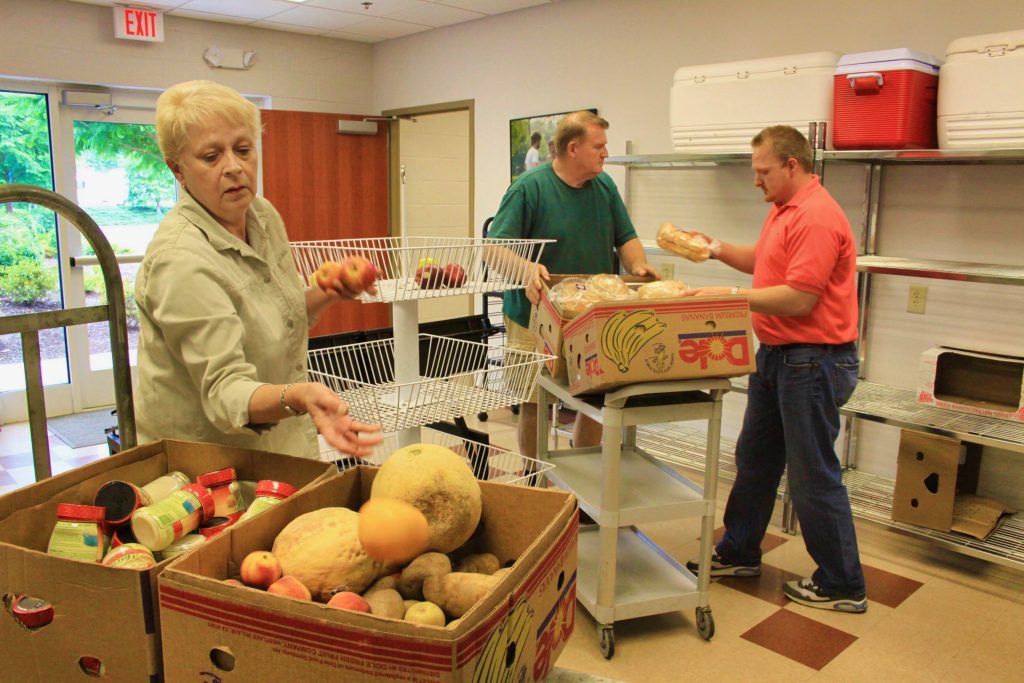
When SNAP benefit cuts took effect in November, our region saw a significant increase in families visiting local food pantries to supplement their grocery budget. Many pantries experienced more than a 20 percent increase in visits compared with previous years, continuing a trend of growing need that has persisted since 2020.

The Community Foundation responded by bringing funders and private foundations together to hear directly from food pantry partners about what they were seeing on the ground. By sharing regional data and identifying gaps in services, CACF helped funders understand where resources were needed most, allowing them to respond in real time. Donor-advised funds of all sizes directed $807,000 in distributions toward regional food security in the fourth quarter alone, with grants ranging from $250 to $20,000. When donors give through the Community Foundation, their contributions combine with those of other funders and our own resources, multiplying the impact of every dollar directed toward a community need.

This group of funders has committed to ongoing collaboration to identify new solutions to improving regional food access and responding together to other emerging community needs.

two girls eating apples

Scholarships

Cultivating the Next Generation

When Wilbert Dean thinks about education in Buckingham County, he recalls his father, a man who was forced to leave school in the second grade, but made sure every one of his children understood the value of education.

“If he had had an education,” Mr. Dean reflects, “there’s no telling what he would have done.” That conviction, shaped by watching his father navigate a world designed to limit him, is what led Mr. Dean and his wife to establish the Dean Farms Legacy Scholarship at the Community Foundation.

The scholarship supports Buckingham High School seniors pursuing a two-year or four-year degree, with a particular focus on first-generation college students.

Mr. Dean wants Buckingham students, particularly those who might not see themselves as college-bound, to understand that investing in their education builds something that no one can take away, and that the benefits of that investment will reach far beyond themselves into future generations.

Mr. Dean’s relationship with the Community Foundation grew out of his years of work building Ellis Acres, a historic preservation and community education center in Buckingham County. He attended grant-writing sessions hosted by the foundation, learned to write stronger proposals, and built working relationships with staff who helped him secure funding for the project over time. When it came time to create the Dean Farms Legacy Scholarship, he knew the Community Foundation was the right home for it.

Wilbert Dean (center) with sisters Thelma Newman (left), and Carolyn Dean Wilson (right)
Sitting: Patricia Dean, wife of Wilbert Dean
Every Step of the Way

Since its founding, The South James River Community Foundation has focused on the everyday needs of community members in Buckingham County. The organization has supported school programs and student initiatives for years, and its scholarship fund reflects the belief that helping young people access higher education is one of the most direct investments a community can make in its own future.

Rather than limiting support to a single award at graduation, the fund allows students to reapply for financial assistance each year, recognizing that the need for support does not end when a student walks across the stage. The scholarship is open to students pursuing two- or four-year degrees, as well as vocational and trade programs, and the selection process does not hinge on GPA. As one board member put it, if a student’s grades are good enough for the institution they are attending, they are good enough for South James River Community Foundation.

The connection to CACF came through community ties, word of mouth, and long-standing relationships. The board knew CACF staff member and Buckingham resident Chaquita Venable before she joined the foundation, and that existing trust made the partnership feel like a natural fit. CACF handles the administrative work of managing the fund, and The South James River Community Foundation stays focused on the community members it knows and serves. The fund awards $1,000 scholarships to 10 Buckingham seniors each year.

Building relationships with scholarship providers across our region is an important part of our work. Before 2025, we had no scholarship funds serving Buckingham County students, and now we have four!

Bama Works Fund

Into the Fray

When communities are faced with challenges, the Bama Works Fund of Dave Matthews Band is often first to the table. In our region, Dave Matthews Band has served as a catalyst for supporting affordable housing. The band, through their Affordable Housing Opportunity Fund, provided an initial $5 million gift to revitalize Charlottesville’s 376 units of public housing. In addition to replacing these existing units with safe, comfortable, and modern homes, the effort is helping generate significantly more affordable housing on the Charlottesville Redevelopment and Housing Authority’s 40 acres of land, helping address the affordable housing crisis. This private philanthropy leverages federal, state, and local funding to help build what will ultimately be $200 million worth of new, affordable housing. 

In addition to housing, Bama Works has been one of the first major funders to support solutions for the continuum of care and the local shelters. From the gift for permanent supportive housing through the Vista 29 project, to significant support of the Salvation Army’s capital campaign, the fund has not hesitated to navigate the complexities of low-barrier shelter solutions. The band’s ability to step up first with lead gifts and a willingness to take risks with their funding have created transformative opportunities that support our region’s housing ecosystem. From low-barrier shelter options to truly affordable housing, the Bama Works Fund of the Dave Matthews Band is a generous thought partner and a funder committed to a thriving region.

While the band’s financial and positional capital has brought significant resources to our region, the Bama Works Fund’s impact doesn’t stop there. Across the country, their fund has supported communities facing natural disasters. When Hurricane Helene hit the Southeast in 2024, the band stepped in to support rebuilding and recovery efforts. Through their Soulshine concert fundraiser, they raised more than $4.5 million to support organizations in North Carolina and Florida, deploying resources quickly to support emergency response and rebuilding efforts.

Dave Matthews Band Concert

Agency Funds

The Value of Trees

Charlottesville’s tree canopy has declined significantly since 2004, and the consequences are not evenly distributed. Sparse tree cover and low-income neighborhoods tend to coincide, bringing with them real health and energy impacts on residents. ReLeaf Cville was founded in 2021 to address this problem directly. The organization works across three areas: tree planting, tree preservation, and education. Since 2021, ReLeaf has planted more than 450 trees in lower-canopy neighborhoods, including 10th & Page, Fifeville, Rose Hill, and Woolen Mills. Last year, they launched a preservation initiative, treating 100 mature trees threatened by invasive plants and insects across 60 properties in Fifeville and 10th & Page. Their long-term goal is to help every Charlottesville neighborhood reach 40 percent tree canopy coverage.

Central to their work is the Green Team, a paid summer fellowship that engages 24 teenagers each year in hands-on tree planting and maintenance. Fellows learn tree biology, identification, and care, and they go door to door in low-canopy neighborhoods offering free trees to homeowners. The ripple effects have been meaningful; alumni have gone on to earn environmental engineering scholarships, secure internships with the Virginia Department of Forestry, and serve as Virginia Youth Climate Ambassadors. 

The Community Foundation has been a partner since ReLeaf’s founding, supporting the organization as it grew from a donor-advised fund into an independent nonprofit. ReLeaf continues to hold an agency fund at the Community Foundation, a relationship that has provided both financial infrastructure and access to philanthropic resources aligned with their mission. 

Supporting our Libraries

The Jefferson-Madison Regional Library system serves more than 200,000 Central Virginia residents across eight locations and a Bookmobile, circulating more than 1.6 million books and items each year. Supporting this work is the Friends of the Jefferson-Madison Regional Library, a volunteer-powered organization that has worked for decades to make sure the library has what it needs.

The Friends’ relationship with the Community Foundation began in 1992, when they established the Library Endowment Fund with an initial gift in honor of Jane and Art Hess, longtime volunteers described as the heart and soul of the annual book sale. Over the following three decades, the fund grew through bequests, annual contributions, investment returns, and donations from local groups and individuals.

In 2018, working with the Community Foundation, the Friends created a family of funds, giving each library branch its own fund for capital needs and special projects. The model was put to work almost immediately: The Nelson Memorial Library Fund held $500,000 in donations raised for a branch renovation, resulting in a remote library kiosk, an outreach vehicle serving Nelson County, a music garden, new collections, and more.

The Community Foundation manages the administrative responsibilities of the Friends’ agency fund, allowing the Friends and the JMRL to stay focused on maintaining public libraries with robust programming and services for all in our region.

People shopping for books
Two children reading books on the floor

Designated Funds

The Art of Giving

Anne Carley moved to Charlottesville in 2005 after having lived for many years in New York City. She appreciates many things about the region, but perhaps most important is the fact that organizations here show a commitment to supporting a wide range of creative artists. When Anne began thinking about her estate planning, she knew she wanted her funds to go to organizations supporting creative expression by and for young people, but she didn’t find an existing charity with this mission in mind.

A friend suggested the Community Foundation, and she realized she could direct her giving to a few different organizations through the foundation. She researched organizations with missions that intersected hers, and staff at the foundation suggested additional possibilities. Together, they built a list that became the basis for a designated fund that will support several organizations in the region in the years ahead.

A designated fund allows donors to direct their giving in perpetuity to specific organizations they care about, with the Community Foundation handling the administrative work of managing and distributing the funds. For those considering a designated fund, Anne’s advice is simple: Think carefully about what you want to accomplish, then talk openly with the Community Foundation about your intentions and goals to arrive at a meaningful plan.

Anne Carley, fundholder at the Charlottesville Area Community Foundation

Ways to Give

Open a Fund

Your home for partnership: Starting a fund at the Community Foundation is an easy, flexible, and efficient way to manage your giving and maximize impact.

Endowment

Plant a seed: A gift to our endowment helps deepen our investments within and across the region, turning your generosity into an engine for change that lasts for lifetimes.

Annual Fund

Amplify your giving: An annual fund gift bolsters capacity building, drives strategic initiatives, and deploys catalytic resources across our region.

Estate Planning

Simple legacy planning: Take advantage of several easy estate planning opportunities to support our region and the causes you love—forever.

For information about giving or to contribute, please email Director of Strategic Growth Terrel White at twhite@cacfonline.org.

Thank You

Year after year, the donors who partner with the Community Foundation remind us why this work matters. Your giving reflects a deep commitment to the people and places that make this region what it is, and to a belief that we are all better when we invest in one another. Because of your generosity, we are able to be creative, responsive, and present when our region needs us most.

Thank you for your continued partnership and for standing with us as we work toward a region where everyone can belong, participate, contribute, and thrive.

Photos by Joumana Altallal, Monica Pedynkowski, Kori Price, The Smiths, Blue Ridge Food Bank, and ReLeaf;
cover photo by Melody Robbins; Dave Matthews Band photo courtesy of Red Light Management.